

Best Car Loan Deals from Small PSU Government Banks in 2025: Win-Win with GST 2.0 Rate Cuts
The perfect storm for car buyers has arrived in India! With the revolutionary GST 2.0 implementation reducing car prices by up to ₹3.5 lakh and small PSU government banks offering car loans starting from an incredibly low 7.80% interest rate, 2025 presents an unprecedented opportunity for smart buyers to fulfill their automotive dreams. This double benefit of reduced car costs and affordable financing creates the ultimate win-win situation for Indian consumers.
🚗 GST 2.0 + Low Interest Rates = Maximum Savings!
Car prices dropped by ₹65,000 to ₹3.5 lakh + Interest rates as low as 7.80% = Your dream car is now more affordable than ever!

Complete Navigation Index
- Complete Car Loan Introduction
- GST 2.0 Rate Cut Benefits and Car Price Reductions
- Types of Car Loans Available
- Car Loan Balance Transfer Process
- Who is Eligible for Car Loans
- Car Loan Processing Time
- Complete List of All PSU Banks in India
- Interest Rates and Fee Comparison
- Required Documents Checklist
- Additional Charges and Fees
- Key Advantages of PSU Bank Car Loans
- Final Summary and Smart Buying Strategy
Complete Car Loan Introduction
A car loan is a secured financial instrument designed to help individuals purchase new or used vehicles by offering up to 90-100% financing of the vehicle's on-road price. In India's rapidly evolving automotive finance landscape of 2025, car loans have become the primary gateway to vehicle ownership, with the market now valued at USD 24 billion and growing exponentially.
PSU government banks have consistently maintained their leadership position in India's auto financing sector, leveraging their extensive branch networks, government backing, and customer-centric policies to offer unparalleled value propositions. Unlike private lenders focused on profit maximization, PSU banks operate under regulatory oversight ensuring fair lending practices, transparent fee structures, and competitive interest rates that truly benefit consumers.
GST 2.0 Rate Cut Benefits and Car Price Reductions
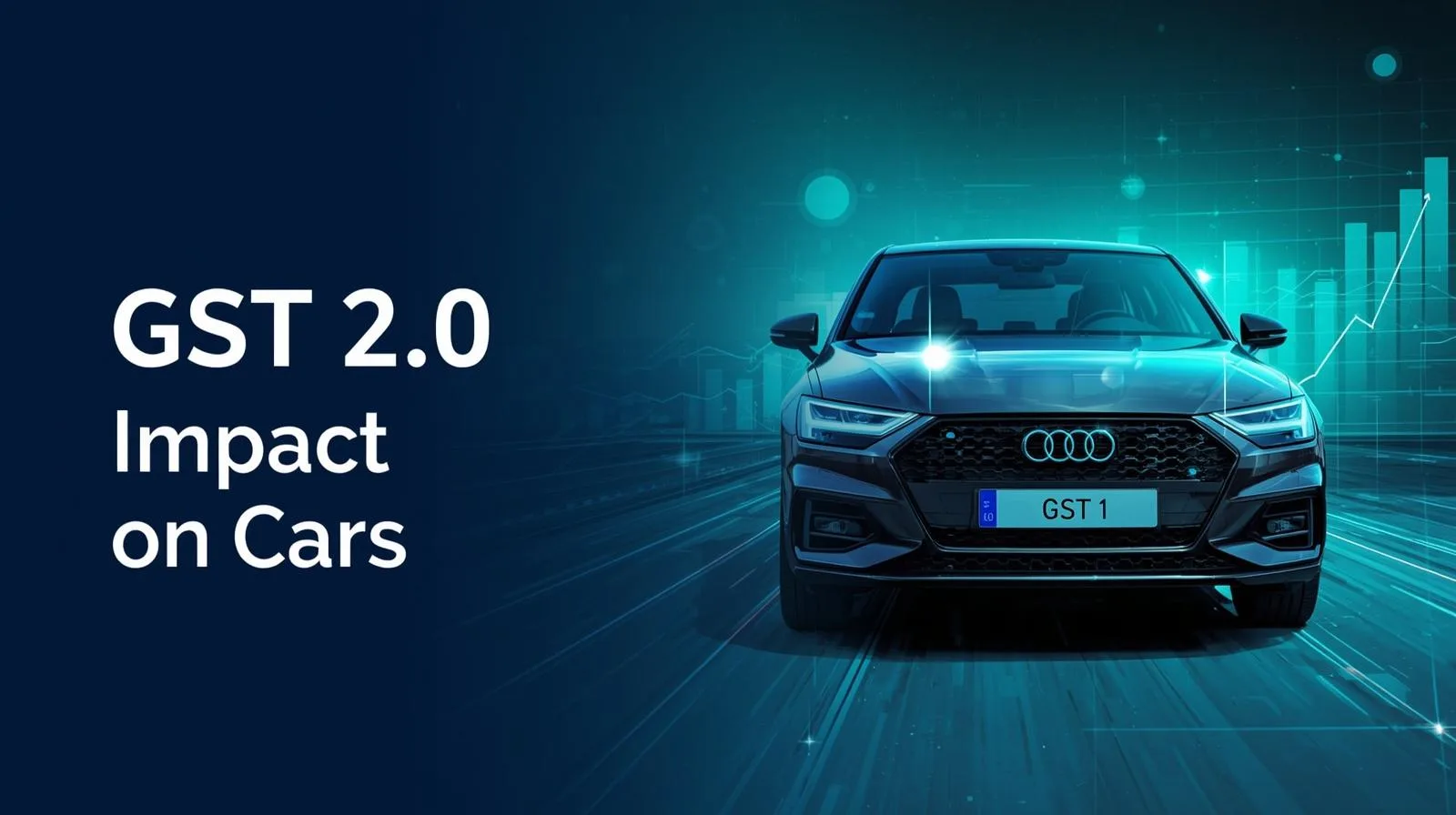
The implementation of GST 2.0 effective September 22, 2025, represents the most significant automotive tax reform in India's recent history. This landmark policy revision has resulted in substantial price reductions across all vehicle categories, creating unprecedented affordability for Indian car buyers.
Category-wise GST 2.0 Impact
Small Cars and Compact SUVs (Engine up to 1200cc Petrol/1500cc Diesel)
- New GST Rate: 18% (reduced from 28%)
- Price Reduction: 5-7% of on-road price
- Popular Models Benefiting: Maruti Swift, Tata Punch, Hyundai Grand i10 Nios
- Example Savings: Tata Punch top model price drops from ₹11.95 lakh to ₹10.75 lakh (₹1.20 lakh savings)
Larger SUVs and Premium Vehicles
- New GST Rate: 40% (without cess, previously 28% + 17% cess = 45%)
- Price Reduction: 5% effective rate reduction
- Examples: Hyundai Creta saves ₹90,000, Mahindra XUV700 saves over ₹2 lakh
Hybrid Vehicles
- New GST Rate: 18% (down from 43%)
- Massive Savings: Toyota Urban Cruiser Hyryder, Maruti Grand Vitara now significantly cheaper
Electric Vehicles (EVs)
- GST Rate: Remains at ultra-low 5%
- Position: Cheapest ownership category in India
Major Manufacturer Price Cuts
| Car Model | Maximum Price Reduction | Manufacturer |
|---|---|---|
| Tata Nexon | Up to ₹1,55,000 | Tata Motors |
| Mahindra XUV700 | Up to ₹1,56,000 | Mahindra & Mahindra |
| Tata Safari | Up to ₹1,45,000 | Tata Motors |
| Tata Harrier | Up to ₹1,40,000 | Tata Motors |
| Tata Altroz | Up to ₹1,10,000 | Tata Motors |
| Toyota Fortuner | Up to ₹3,50,000 | Toyota |
Types of Car Loans Available
PSU banks in India provide a comprehensive suite of car loan products designed to cater to diverse customer requirements, from first-time buyers to commercial fleet operators. Understanding these options helps you choose the most suitable financing solution.
Personal Car Loan Categories
New Car Loans
- Coverage: Up to 90-100% of on-road price
- Interest Rates: Starting from 7.80% p.a.
- Tenure: Up to 7 years
- Special Features: Instant approvals, minimal documentation, competitive processing fees
- Eligibility: Both salaried and self-employed individuals
Pre-owned/Used Car Loans
- Coverage: Up to 85% of car value
- Interest Rates: Typically 2-4% higher than new car rates
- Vehicle Age Limit: Usually not more than 5 years
- Tenure: Shorter than new car loans, typically 3-5 years
- Condition: Vehicle must pass technical evaluation
Electric Vehicle (EV) Loans
- Interest Rates: Special concessional rates, often 0.25-0.50% lower than regular car loans
- Government Incentives: Additional subsidies and benefits available
- Processing Fees: Often waived or reduced for green financing
- Coverage: Up to 90% financing available
Commercial Car Loan Categories
Commercial Vehicle Loans
- Purpose: Vehicles used for business, transportation, logistics
- Loan Amount: Higher limits compared to personal car loans
- Tenure: Extended repayment periods, up to 8-10 years
- Interest Rates: Competitive rates for business use
- Tax Benefits: Depreciation and interest deductions available
Fleet Financing
- Bulk Purchase: Financing multiple vehicles simultaneously
- Corporate Clients: Tailored solutions for businesses
- Flexible Terms: Customizable repayment structures
- Volume Discounts: Better rates for larger fleet purchases
Specialized Loan Products
| Loan Type | Target Audience | Special Features |
|---|---|---|
| Green Car Loans | Eco-conscious buyers | Lower rates for hybrid/electric vehicles |
| Women Car Loans | Female borrowers | Additional 0.25% interest rate concession |
| Senior Citizen Loans | Retirees and pensioners | Flexible documentation, extended age limits |
| Rural Car Loans | Rural and semi-urban buyers | Simplified processes, local language support |

Car Loan Balance Transfer Process
Car loan balance transfer allows borrowers to switch their existing auto loan from a higher-interest lender to a PSU bank offering better terms. This process can result in substantial savings over the loan tenure, making it a smart financial strategy for cost-conscious borrowers.
Step-by-Step Balance Transfer Process
- Loan Evaluation and Research
- Assess your current loan's outstanding principal, interest rate, and remaining tenure
- Research PSU banks offering competitive rates and favorable terms
- Calculate potential monthly EMI savings and total interest reduction
- Factor in balance transfer charges and processing fees
- Eligibility Verification
- Ensure you meet the new lender's eligibility criteria
- Check minimum loan vintage requirements (typically 6-12 months)
- Verify credit score requirements and income stability
- Confirm vehicle age and condition meet transfer criteria
- Documentation Preparation
- Gather existing loan documents and statements
- Prepare income proof and identity documentation
- Obtain vehicle registration and insurance papers
- Collect bank statements and financial records
- Application Submission
- Submit balance transfer application to chosen PSU bank
- Provide all required documents and transfer request forms
- Undergo credit assessment and vehicle valuation
- Wait for approval decision (typically 3-7 working days)
- Loan Closure and Transfer
- New bank pays outstanding amount to existing lender
- Original lender issues No Objection Certificate (NOC)
- Vehicle documents transferred to new bank
- Fresh loan agreement signed with updated terms
- Post-Transfer Formalities
- Update vehicle registration with new lender details
- Modify insurance policy to reflect new financier
- Set up new EMI auto-debit instructions
- Receive updated loan documents and payment schedule
Required Documents for Balance Transfer
| Document Category | Specific Requirements |
|---|---|
| Identity Proof | Aadhar Card, PAN Card, Driving License |
| Address Proof | Utility bills, rental agreement, bank passbook |
| Income Proof | Salary slips, ITR, bank statements |
| Existing Loan Documents | Loan agreement, repayment statements, NOC |
| Vehicle Documents | Registration certificate, insurance policy |
Who is Eligible for Car Loans
PSU banks maintain comprehensive yet accessible eligibility frameworks designed to serve a broad spectrum of Indian borrowers while ensuring responsible lending practices. These criteria are generally more flexible than private lenders, reflecting the government's commitment to financial inclusion.
Universal Eligibility Parameters
| Criteria | Salaried Individuals | Self-Employed |
|---|---|---|
| Minimum Age | 18-21 years | 21 years |
| Maximum Age | 60-65 years at maturity | 65-75 years |
| Minimum Annual Income | ₹3-4 lakh | ₹3.5-6 lakh |
| Work Experience | Minimum 1-2 years] | Minimum 2-3 years business |
| Credit Score | Above 650 (preferably 700+) | Above 650 |
Category-wise Detailed Requirements
Salaried Employee Eligibility
- Employment Type: Public/Private companies, Government, PSUs, MNCs
- Job Stability: Minimum 1 year continuous employment with current employer
- Salary Account: Preferably with the lending bank for faster processing
- Monthly Income: Minimum ₹25,000-30,000 per month
- Additional Requirements: Post-paid mobile connection, residence stability
Self-Employed Individual Eligibility
- Business Type: Manufacturing, trading, services, professionals
- Business Vintage: Minimum 2-3 years in same line of business
- Financial Documentation: ITR, audited financials, GST returns
- Income Assessment: Based on latest 2 years ITR and bank statements
- Business Licenses: Valid trade licenses and regulatory approvals
Special Category Benefits
| Category | Special Benefits | Additional Features |
|---|---|---|
| Government Employees | Lower documentation, preferential rates | Extended tenure options, job security consideration |
| Women Borrowers | 0.25% interest rate concession | Simplified documentation, faster processing |
| Defense Personnel | Special schemes, flexible deployment consideration | Extended age limits, pension income acceptable |
| Senior Citizens | Pension income acceptable | Co-applicant options, medical insurance linkage |
| NRI/PIO | Foreign income consideration | Flexible documentation, overseas employment acceptance |

Car Loan Processing Time
PSU banks have significantly modernized their car loan processing capabilities in 2025, with most applications being approved within 2-7 days depending on documentation completeness and applicant profile. This represents a dramatic improvement from traditional processing times while maintaining thorough due diligence standards.
Detailed Processing Timeline
| Processing Stage | Duration | Key Activities |
|---|---|---|
| Initial Application Review | 1-2 hours | Document verification, eligibility check, credit score assessment |
| Credit Assessment | 1-2 days | Income verification, banking relationship review, risk evaluation |
| Vehicle Valuation | 1 day | Market price verification, model approval, depreciation assessment |
| Final Approval | 1-2 days | Sanction letter preparation, terms finalization, approval communication |
| Documentation & Disbursement | 2-3 days | Loan agreement signing, disbursement to dealer, registration formalities |
Fast-Track Processing Categories
- Express Processing (Same Day):
- Existing bank customers with excellent relationship
- Pre-approved customers through digital channels
- Government employees and PSU staff
- Loan amounts under ₹5 lakh with complete documentation
- Priority Processing (1-2 Days):
- Salaried customers from Fortune 500 companies
- Customers with salary accounts in the same bank
- Repeat customers with clean repayment history
- Women borrowers under special schemes
- Standard Processing (3-7 Days):
- First-time borrowers with complete documentation
- Self-employed applicants with proper financial records
- Used car loan applications requiring technical evaluation
- Balance transfer cases from other banks
Factors Affecting Processing Time
- Documentation Completeness: Complete, accurate documents reduce processing time by 50-70%
- Credit History: Clean credit records enable faster approvals
- Income Verification: Salaried customers typically process faster than self-employed
- Loan Amount: Smaller loans often receive priority processing
- Banking Relationship: Existing customers enjoy expedited processing
- Vehicle Type: New cars from approved dealers process faster than used cars
Complete List of All PSU Banks in India
India's public sector banking landscape comprises 12 major government-owned banks following the strategic consolidation initiative completed in recent years. These institutions collectively serve over 85 crore customers through an extensive network of 85,000+ branches, making them the backbone of India's banking infrastructure.
Major PSU Banks with Car Loan Offerings
| Bank Name | Branches | Established | Car Loan Specialization |
|---|---|---|---|
| State Bank of India (SBI) | 22,937 | 1806 | Largest network, comprehensive schemes, green car loans |
| Punjab National Bank (PNB) | 10,189 | 1894 | Competitive rates, flexible terms, rural penetration |
| Bank of Baroda | 8,426 | 1908 | International presence, up to ₹5 crore funding |
| Union Bank of India | 8,649 | 1919 | Union Miles scheme, green vehicle financing |
| Canara Bank | 9,850 | 1906 | Digital innovation, AI-enabled processing |
| Indian Bank | 5,909 | 1907 | Lowest rates starting 8.25%, excellent customer service |
| Bank of India | 5,306 | 1906 | Star Vehicle Loan, doctor-specific schemes |
| Bank of Maharashtra | 2,641 | 1935 | Lowest interest rates 7.70%-12.00%, no prepayment penalty |
| UCO Bank | 3,302 | 1943 | Rural focus, simplified documentation, quick processing |
| Central Bank of India | 4,552 | 1911 | Cent Vahini for women, competitive commercial vehicle loans |
| Indian Overseas Bank | 3,400 | 1937 | NRI-friendly policies, overseas income consideration |
| Punjab & Sind Bank | 1,500 | 1908 | Regional expertise, personalized service, SME focus |
Regional Strength and Specializations
- Northern India: PNB, Punjab & Sind Bank dominate with strong rural penetration
- Western India: Bank of Baroda, Bank of Maharashtra lead with commercial vehicle expertise
- Southern India: Indian Bank, Canara Bank, Indian Overseas Bank provide comprehensive coverage
- Eastern India: UCO Bank specializes in regional needs and simplified processes
- Central India: Central Bank of India offers tailored solutions for diverse demographics
- Pan-India: SBI, Union Bank of India provide nationwide uniform services and standards
-k05G--621x414@LiveMint.jpg)
Interest Rates and Fee Comparison 2025
PSU banks consistently offer India's most competitive car loan interest rates, with several institutions providing financing starting as low as 7.60% per annum. This represents a significant advantage over private banks and NBFCs, making government banks the preferred choice for cost-conscious automotive financing.
Comprehensive PSU Bank Car Loan Rates (September 2025)
| Bank Name | Interest Rate (p.a.) | Processing Fee | Tenure | Special Features |
|---|---|---|---|---|
| Bank of Maharashtra | 7.70%-12.00% | Contact bank | Up to 7 years | No prepayment penalty, RLLR linked |
| Punjab National Bank | 7.80% onwards | Nil | Up to 7 years | Green car loan benefits |
| Bank of India | 8.25% onwards | Nil | Up to 7 years | Doctor Plus scheme, lowest documented rate |
| State Bank of India | 8.65%-9.45% | 0.25% + GST | Up to 7 years | Loyalty schemes, green car discounts |
| Union Bank of India | 8.70%-10.40% | Contact bank | Up to 7 years | Union Miles program, no upper limit |
| Central Bank of India | 8.75% onwards | Contact bank | Up to 7 years | Women borrower benefits (Cent Vahini) |
| Bank of Baroda | 8.75% onwards | ₹5,000-₹9,000 | Up to 7 years | Up to ₹5 crore funding, international presence |
| Indian Bank | 7.8% onwards | ₹3,500-₹5,500 | Up to 7 years | Excellent customer service ratings |
| Canara Bank | 9.15%-11.95% | 0.25% (₹1,000-₹5,000) | Up to 7 years | Green vehicle benefits, digital processing |
| UCO Bank | 8.85%-10.05% | Nil | Up to 7 years | No upper limit, rural focus |
Special Interest Rate Categories
Green Vehicle Financing
- Electric Vehicles: Additional 0.25-0.50% discount on standard rates
- Hybrid Vehicles: Special rates available post GST 2.0 benefits
- CNG/LPG Vehicles: Environmental incentives and lower processing fees
Category-wise Concessions
| Borrower Category | Rate Concession | Available Banks |
|---|---|---|
| Women Borrowers | 0.25% additional discount | Most PSU banks |
| Government Employees | 0.50% concession possible | All PSU banks |
| Existing Home Loan Customers | 0.25% rate reduction | Bank of Baroda, others |
| High Net Worth Individuals | Negotiable rates | All major PSU banks |

Required Documents Checklist
PSU banks maintain standardized documentation requirements across institutions to ensure transparency, regulatory compliance, and streamlined processing. The comprehensive document framework covers identity verification, income assessment, and collateral security validation.
Core Identity and Address Documentation
KYC (Know Your Customer) Documents
- Aadhar Card: Primary identity and address proof, universally accepted
- PAN Card: Mandatory for tax compliance and identity verification
- Driving License: Essential for car loan, serves dual purpose as ID and address proof
- Passport: Alternative ID proof, especially useful for NRI customers
- Voter ID Card: Additional identity verification, widely accepted
Address Verification Documents
- Electricity Bill: Recent utility bill (not older than 3 months)
- Telephone Bill: Landline or post-paid mobile bill
- Gas Connection Bill: LPG or piped gas connection statement
- Bank Passbook: With current address clearly mentioned
- Rental Agreement: Registered lease deed for rented accommodation
- Property Tax Receipt: Municipal tax payment proof
Income Documentation by Category
| Applicant Type | Primary Income Proof | Supporting Documents |
|---|---|---|
| Salaried Employees | • Latest 3 months salary slips • Form 16/Form 16A • Bank statements (6 months) |
• Employment certificate • Appointment letter • Employee ID card |
| Self-Employed Individuals | • ITR for last 2-3 years • Audited P&L statements • Banking statements (12 months) |
• Business registration certificate • GST returns • Trade license |
| Professionals (CA, Doctor, Lawyer) | • Professional practice certificate • ITR (last 2 years) • Client receipts/billings |
• Professional membership proof • Practice registration • Chamber/clinic lease |
| Government Employees | • Latest pay slip • Form 16 or GA-55 • Service certificate |
• Employee provident fund statement • Pension details (if applicable) |
Vehicle-Related Documentation
For New Car Purchase
- Proforma Invoice: From authorized dealer showing car specifications and price
- Car Brochure: Technical specifications and variant details
- Dealer Certificate: Authorized dealership credentials and tie-up confirmation
- Insurance Quotation: Comprehensive insurance premium estimate
For Used Car Purchase
- Registration Certificate (RC): Original vehicle registration document
- Valid Insurance: Current insurance policy with transfer endorsement
- Pollution Certificate: Valid PUC (Pollution Under Control) certificate
- Hypothecation Clearance: NOC from previous financier if applicable
- Service Records: Maintenance history and service book
- Valuation Report: Technical assessment by bank-approved valuers
Financial and Legal Documentation
| Document Type | Purpose | Validity |
|---|---|---|
| Blank Cheques (2-3) | EMI auto-debit setup | From active bank account |
| Passport Photos | Loan file documentation | Recent (3-6 months old) |
| Stamp Papers | Legal agreements and declarations | ₹100-500 value as required |
| Co-applicant Documents | Joint liability and income support | Complete KYC and income proof |
Digital Documentation and E-KYC
- Digital Signatures: E-sign capability for faster processing
- Online Document Upload: Scanned copies acceptable for initial processing
- Video KYC: Remote verification for eligible customers
- API Integration: Direct income verification for salaried employees from partner companies
- Bank Statement Analysis: Automated income assessment through digital platforms

Additional Charges and Fees
PSU banks maintain transparent and competitive fee structures with minimal hidden charges, offering significant advantages over private lenders who often impose multiple fees throughout the loan lifecycle. Understanding these charges helps borrowers make informed financial decisions.
Mandatory Government and Regulatory Charges
| Charge Type | Amount/Rate | Purpose | Payment Timing |
|---|---|---|---|
| Stamp Duty | 0.1%-1% of loan amount (state-wise variation) | Legal documentation authentication | At loan sanction |
| Registration Charges | 4%-6% of vehicle value (state RTO rates) | Vehicle registration with authorities | At vehicle delivery |
| Insurance Premium | 2%-4% of vehicle value annually | Comprehensive vehicle coverage | Annual payment |
| Road Tax | Varies by state and vehicle type | State government revenue | At registration |
Bank-Specific Processing Charges
PSU Bank Processing Fees Comparison
| Bank Name | Processing Fee | Documentation Charges | Prepayment Penalty |
|---|---|---|---|
| Bank of India | Nil | Minimal | Nil |
| Punjab National Bank | Nil | Contact bank | Nil |
| UCO Bank | Nil | Minimal | Nil |
| State Bank of India | 0.25% + GST | Standard | Nil after 6 months |
| Bank of Baroda | ₹5,000-₹9,000 | Included | Nil |
| Indian Bank | ₹3,500-₹5,500 | Minimal | Nil |
| Canara Bank | 0.25% (₹1,000-₹5,000) | Reasonable | Nil |
Optional Service Charges
Additional Services and Associated Costs
- EMI Bounce Charges: ₹300-₹750 per instance (significantly lower than private banks)
- Statement Generation: Usually free for first 2-3 statements annually
- Duplicate NOC: ₹100-₹500 for duplicate No Objection Certificate
- Balance Transfer: 0.5%-1% of outstanding amount or minimum ₹2,500
- Loan Conversion: Fixed to floating or vice versa - nominal charges
- Part Payment: Generally free, some banks may charge ₹500-₹1,000
Third-Party and External Charges
| Service Provider | Service | Typical Cost |
|---|---|---|
| Insurance Companies | Comprehensive car insurance | 2%-5% of vehicle value annually |
| RTO/Transport Dept. | Registration, RC, road tax | 8%-12% of vehicle value (one-time) |
| Car Dealers | Handling, accessories, extended warranty | 2%-5% of vehicle price |
| Valuation Agencies | Used car technical evaluation | ₹2,500-₹5,000 |
Hidden Charges Comparison: PSU vs Private Banks
| Charge Category | PSU Banks | Private Banks/NBFCs | Savings with PSU |
|---|---|---|---|
| Processing Fees | 0%-1% or nil | 2%-3% + GST | ₹20,000-₹30,000 on ₹10 lakh loan |
| Prepayment Charges | Nil | 2%-5% of outstanding | ₹15,000-₹40,000 potential |
| Administrative Fees | Minimal | Multiple charges | ₹5,000-₹15,000 annually |
| Documentation | Transparent, minimal | Multiple hidden fees | ₹3,000-₹8,000 |
Key Advantages of PSU Bank Car Loans
Public Sector Undertaking banks provide compelling advantages that make them the superior choice for automotive financing in India. These benefits stem from government ownership, customer-centric policies, and commitment to financial inclusion rather than pure profit maximization.
Financial Advantages
Interest Rate Benefits
- Lowest Market Rates: Starting from 7.70% p.a., significantly below private bank offerings
- Rate Stability: Government backing ensures consistent, predictable interest rate policies
- No Rate Manipulation: Transparent RLLR (Repo Linked Lending Rate) based pricing
- Long-term Rate Protection: Fixed rate options available for entire loan tenure
- Special Category Discounts: Additional 0.25-0.50% concessions for women, government employees
Fee and Charge Advantages
- Zero Processing Fees: Many PSU banks charge nil processing fees
- No Prepayment Penalties: Complete freedom for early loan closure without charges
- Minimal Administrative Costs: Transparent fee structures with no hidden charges
- Bulk Financing Benefits: Better rates for multiple vehicle purchases
- Loyalty Rewards: Existing customers receive preferential pricing
Service Excellence Advantages
Network and Accessibility
- Extensive Branch Network: Over 85,000 branches nationwide ensuring local accessibility
- Rural Penetration: Strong presence in Tier-2, Tier-3 cities where private banks are limited
- Local Language Support: Regional language assistance and cultural understanding
- Doorstep Banking: Home visits for documentation and disbursement in many locations
- ATM Network: Comprehensive ATM coverage for easy EMI payments and account management
Customer Relationship Benefits
- Relationship Banking: Holistic financial solutions including savings, insurance, investments
- Experienced Staff: Long-tenured relationship managers with deep automotive financing expertise
- Personalized Service: Individual attention rather than purely digital interactions
- Community Connect: Understanding of local market conditions and customer needs
- Government Employee Benefits: Special schemes for PSU, defense, and government workers
Policy and Regulatory Advantages
| Advantage Category | PSU Bank Benefit | Impact for Borrowers |
|---|---|---|
| Government Backing | Sovereign guarantee on operations | Unmatched security and stability |
| Regulatory Compliance | Strict RBI oversight and fair practices | Protection from predatory lending |
| Social Banking | Financial inclusion mandate | Equal access regardless of location/income |
| Transparency | Government accountability standards | Clear, honest communication on terms |
| Long-term Stability | Not driven by quarterly profit targets | Consistent policies and relationship continuity |
Technology and Innovation Advantages
Digital Banking Excellence
- Modern Digital Platforms: State-of-the-art mobile apps and internet banking
- AI and Automation: Faster processing while maintaining human touch
- API Integration: Seamless integration with dealer systems and insurance providers
- Paperless Processing: E-KYC, digital signatures, and online documentation
- Real-time Tracking: Application status monitoring and transparent communication
Value-added Services
- Insurance Integration: Bundled insurance products at competitive rates
- Maintenance Financing: Extended warranty and service package funding
- Fuel Card Benefits: Co-branded credit cards with fuel discounts
- Emergency Services: 24x7 roadside assistance and emergency loan facilities
- Investment Advisory: Wealth management services for high-value customers
Final Summary and Smart Buying Strategy
The Perfect Storm: GST 2.0 + PSU Bank Financing = Maximum Value
2025 represents the ideal convergence for Indian car buyers, where GST 2.0 tax reforms have slashed vehicle prices by ₹65,000 to ₹3.5 lakh while small PSU government banks offer financing at remarkably low 7.70% interest rates. This unprecedented combination creates the ultimate win-win scenario for smart automotive purchases.
Key Financial Advantages Recap
- Double Savings Benefit: GST 2.0 reduces car costs + PSU bank low rates reduce financing costs
- Interest Rate Leadership: PSU banks lead with rates from 7.70% vs private banks at 10-13%
- Zero Hidden Costs: No processing fees, no prepayment penalties, transparent structures
- Government Backing: Sovereign guarantee ensures stability and fair lending practices
- Network Advantage: 85,000+ branches providing unmatched accessibility and service
GST 2.0 Impact Summary
| Vehicle Category | GST Reduction | Price Drop Example |
|---|---|---|
| Small Cars (<1200cc) | 28% → 18% | Tata Punch: ₹1.20 lakh savings |
| Premium SUVs | 45% → 40% | Mahindra XUV700: ₹1.56 lakh savings |
| Hybrid Vehicles | 43% → 18% | Massive savings on Toyota, Maruti hybrids |
| Electric Vehicles | Remains 5% | Cheapest ownership category |
Top PSU Bank Recommendations for 2025
- Best Overall Rates: Bank of Maharashtra (7.70%), Punjab National Bank (7.80%)
- Zero Processing Fees: Bank of India, PNB, UCO Bank
- Largest Network: State Bank of India with 22,937 branches
- Digital Innovation: Canara Bank, Indian Bank for tech-savvy customers
- Regional Expertise: Bank of Baroda (West), Indian Bank (South), UCO Bank (East)
Smart Buying Strategy for 2025
- Timing is Everything: Purchase before festive season demand surge and potential rate changes
- Maximize GST 2.0 Benefits: Focus on vehicles with maximum price reductions
- Choose PSU Banks First: Start applications with 2-3 PSU banks before considering private options
- Leverage Special Categories: Women borrowers, government employees get additional 0.25% discounts
- Consider Green Financing: Electric/hybrid vehicles offer both GST benefits and special loan rates
- Documentation Ready: Prepare complete documents for fastest processing (2-7 days)
Total Savings Potential Example
For a ₹10 lakh car purchase scenario:
- GST 2.0 savings: ₹60,000-₹1.5 lakh (depending on vehicle category)
- PSU bank vs private bank interest savings: ₹2-4 lakh over loan tenure
- Processing fee savings: ₹20,000-₹30,000
- No prepayment penalty benefit: ₹15,000-₹30,000 potential
- Total potential savings: ₹2.95-6.55 lakh
Final Recommendation
The convergence of GST 2.0 tax benefits and PSU bank competitive financing creates an unprecedented opportunity in India's automotive market. Smart buyers who act decisively in 2025, choosing the right PSU bank partnership, can achieve maximum value through this once-in-a-generation alignment of favorable policies and market conditions.
Start your car loan application today with a PSU bank to lock in these exceptional rates and secure your dream vehicle at historically low total costs. The combination of reduced car prices and affordable government bank financing makes 2025 the optimal year for automotive purchases in India. Try to focus on Government small PSU banks, you will get Best Deal.